Shape-Shifting Frog


A fingernail-size frog that can morph its skin texture from spiny to smooth in just minutes is the first shape-shifting amphibian ever found, according to a new report.

The tiny "mutable rain frog" (Pristimantis mutabilis) was discovered on the western slopes of Ecuador's Andes Mountains, in a protected cloud forest reserve. The misty, fog-enshrouded Chocó cloud forest is a biodiversity hotspot, and the protected area, called Reserva Las Gralarias, is also home to several rare birds and butterflies. A new glass frog species, the Las Gralarias glass frog, was reported there in 2012.

Scientists from Cleveland's Case Western Reserve University and Cleveland Metroparks found the shape shifter during their annual survey of the reserve's amphibian population. For the past 10 years, Katherine Krynak, a biologist and Case Western graduate student, and Tim Krynak, a naturalist and Metroparks project manager, have walked the reserve trails together at night, listening for frog calls and scanning for rare species. 

The pair first spotted the frog in 2006 and only snapped a photo, but later realized it could be a newfound species when they enlarged the image. They started calling the frog a "punk rocker" for its spiny-textured skin. "It wasn't until we saw the amazing texture of its skin that we thought, 'wow, this is something different,'" Katherine Krynak told Live Science.

A female mutable rain frog is just 0.8 to 0.9 inches (20 to 23 millimeters) long, and males are even smaller, the new study reports. The rain frogs are a species-rich group that skips the tadpole stage and develops into frogs directly within their eggs.

Lead study author Juan Guayasamín, a professor at the Universidad Tecnológica Indoamérica in Ecuador, first suggested the little frog could be a new species, Krynak said. In 2009, the Krynaks finally saw another punk rocker frog and grabbed it for a detailed photo session, putting it in a small plastic cup overnight.

But when Katherine Krynak opened the cup the next morning, the frog's spines were gone. Thinking she had nabbed the wrong frog, Krynak added moss to the cup to make the frog more comfortable until they could return it to the forest that night. "We were both so disappointed because it had taken years to find another one," she said.

But the Krynaks said they couldn't believe their eyes the next time they checked on the frog. Its spiny skin texture had returned.

Futuristic Laser Weapon


The next generation of futuristic weapons has arrived. The U.S. Navy announced that its high-tech laser weapon is ready to disable and destroy enemy drones and small boats, should the need arise.

The 30-kilowatt laser weapon system (LaWS) is housed aboard the USS Ponce, a naval vessel stationed in the Arabian Gulf— a body of water located south of Iraq that separates the Saudi Arabian peninsula from Iran.

While sailors have not yet used the new laser to destroy any real enemy targets, the Navy is prepared to do just that, if necessary, according to Rear. Adm. Matthew Klunder, chief of naval research. 

Sailors operate the laser using a video game-type controller, according to Navy officials. 

The first course of action is a nonlethal option — which amounts to a very bright glare. If a threat keeps coming they can increase the strength of the laser's highly concentrated beam, which will knock out the sensors or control systems on an enemy drone or vessel. If the adversary still doesn't get the hint, the beam can be turned up higher, making it capable of destroying the threat altogether.

Heroin As Cough Medicine


Heroin, chemically known as diacetylmorphine, was once prescribed to treat common ailments such as coughs, colds and pain--the drug was manufactured for such treatment by Bayer starting in 1898, according to BBC News.

Head Transplants Are Coming Soon


Things didn't go so great for Victor Frankenstein or his monster, but don't tell that to Sergio Canavero.

The Italian doctor believes that it's now possible to slice the head of off one person, stitch it to the decapitated body of another, and then reanimate the two-human mash-up. What's more, he says the first head transplant operation could come in two years.

The goal of such an audacious operation would be to extend the lives of people whose bodies were too diseased or injured to keep the head alive. Canavero told The Huffington Post, "Go to any neurology ward, ask to see someone with muscle-wasting disorders, and the answer [as to why the surgery makes sense] will be crystal clear."

That sounds simple enough, if perhaps a bit ghoulish. Canavero, of Turin Advanced Neuromodulation Group, first proposed the idea for head transplantation in 2013. Now, in a new paper published Feb. 3, 2015 in the journal Surgical Neurological International, he outlines the surgical techniques that he believes will move head transplants from the realm of science fiction to medical fact.

These range from cooling the head and donor body to prevent cell death to using a super-sharp blade to cut the spinal cords very cleanly so that the nerve fibers are better able to fuse. Following the surgery, the patient would be kept in a coma for weeks in order to prevent movement that might interfere with healing.

"The greatest technical hurdle to such endeavor is of course the reconnection of the donor's and recipient's spinal cords," Dr. Canavero wrote in 2013. "It is my contention that the technology only now exists for such linkage."

Followers may be one thing Canavero can count on. He told the magazine that several people had already expressed interest in a new body.

No word yet as to how many people have expressed interest in a new head.

Strongest Material In Nature Found In Small Shellfish


The strongest natural material known to man might be found in a small shellfish that clings to rocks around British shores . Researchers discovered that limpets – small aquatic snail-like creatures with conical shells – have teeth with biological structures so strong they could be copied to make cars, boats and planes of the future.

Until now, spider silk was considered the hardest material in nature because of its super-strength and potential applications in everything from bullet-proof vests to computer electronics, but scientists from the University of Portsmouth discovered that the teeth of this tiny shellfish contain a hard mineral known as goethite, which forms in the limpet as it grows.

“Limpets need high strength teeth to rasp over rock surfaces and remove algae for feeding when the tide is in. We discovered that the fibers of goethite are just the right size to make up a resilient composite structure. This discovery means that the fibrous structures found in limpet teeth could be mimicked and used in high-performance engineering applications such as Formula 1 racing cars, the hulls of boats and aircraft structures. 

Near-Death Experiences Actually Can Happen


A scientific study has revealed that near-death experiences such as seeing a bright light, travelling through a tunnel, or the sensation of leaving your own body are more vivid than any other memory. 

According to Dr. Steven Laureys, a Belgian neurologist who heads the Coma Science Group at the university hospital in the city of Liege (Belgium), has spoken to many patients over the years who have awakened from a coma and told him about "journeys" they have been on during the near-death experience.

A team of scientists from the Coma Science Group and the University's Cognitive Psychology Research Uni, conducted Memory Characteristics Questionnaires, which test for the sensory and emotional details in recollections. They then compared near-death experiences with other memories of intense real-life events, as well as memories of dreams and thoughts. The scientists were surprised to find that near-death experiences were much richer than any imagined or real event, including births and marriages.

People who go on the journeys can be forever changed, with some no longer fearing death.

The Kola Superdeep Borehole


The deepest hole ever drilled is the Kola Superdeep Borehole, on the Kola peninsula in the northwest corner of Russia, located near Finland. It was drilled for scientific research by the USSR. Like many large research holes, it had a number of offshoots from the central branch, and the deepest, SG-3, was 7.6 miles (12.262 km) deep. The borehole reached this depth in 1981. The temperature at this depth was 356°F (180°C), at which point the rock became more like a plastic than a solid, stopping further drilling.

Even though the hole in question was 7.6 miles (12.262 km) deep, it only penetrated a third of the Baltic continental crust. The rock at the bottom of the hole was about 2.7 billion years old, and samples brought from near the bottom contributed invaluably to the study of geology and geophysics at the time. The original depth goal was 9.32 miles (15,000 meters), but a faster-than-expected increase in temperature forced a premature halt to the project. If the hole had extended down to its planned depth, the projected temperature would have been 572°F (300°C), well over the maximum operating temperature of the drill bit.

Several interesting discoveries resulted from the hole. Pockets of water were found from time to time, prevented from ascending to the surface by a layer of impermeable rock. An excess of hydrogen was released from the drilling, which researchers described as "boiling" up from the surface of the hole. More details on the geology of the Baltic Shield were discovered. This area formed hundreds of millions of years ago when a supervolcano exploded and sent magma across a fair fraction of the continent.

Hypnotic Suggestibility


Most of the uninitiated have an image of hypnotists as mysterious men, waving pocket watches about and turning their victims subjects into zombie-like states.

Once they're hypnotic state, subjects are compelled to obey, no matter what. And, of course, they must utter the obligatory “Yes, master”, as they carry out the control hypnotist's evil demands.

Hypnosis is a collaborative process, that is to say you have to be willing to take part. Generally, people won't do anything which goes against their personal values or beliefs. If someone tries to tell you to do something that is really against your own values, you won't do it. You'll naturally come out of the state of hypnosis.

Hypnosis is a strange art that for the most part involves a suggestible state where the person under hypnosis is more likely to listen to suggestions by the person performing hypnosis. And it turns out that some people are considered more suggestible than others. 

Scientists have performed studies that confirmed not only that some people have higher hypnotic suggestibility, but that those people are also likely to get a lot more out of hypnosis than those who are not. It is important to note that the same researchers believe that for those who are considered to have low suggestibility, that hypnosis is probably not a very useful option.

Ice Climbing


Ice climbing is the activity of ascending inclined ice formations. Usually, ice climbing refers to roped and protected climbing of features such as icefalls, frozen waterfalls, and cliffs and rock slabs covered with ice refrozen from flows of water.

Generally, there are two kinds of ice climbing -- alpine and waterfall. As you might surmise from its name, you'll find alpine ice in a mountain environment. It's part of the terrain, may be steep or flat, is primarily derived from snow and is sometimes mixed with rock. Waterfall ice, on the other hand, is vertical, frozen water. 

The Antikythera Mechanism


The Antikythera mechanism is an ancient, intricate machine found in a shipwreck near Greece that dates back to about 100 BC. The Antikythera mechanism contains gears and structures that were not found in devices again for 1000 years, and only then when the Muslims and Chinese were busy inventing, while the Europeans were killing each other.

Popular belief was that it was made by the Greeks due to its instructions all being in Greek, but serious research published in serious places suggested the design came from Sicily.

The mechanism was supposedly used to figure out astronomical positions. The problem with that is that at the time this thing was made, no one had yet discovered laws of gravity or how heavenly bodies moved.

The Voynich Manuscript


The Voynich manuscript is an ancient book that has thwarted all attempts at deciphering its contents. It is actually an organized book with a consistent script, discernible organization and detailed illustrations.

It appears to be a real language--just one that nobody has seen before. And it really does appear to mean something. But nobody knows what.

The manuscript contains an illustrated codex hand-written in an unknown writing system. The vellum in the book pages has been carbon-dated to the early 15th century (1404–1438), and may have been composed in Northern Italy during the Italian Renaissance. The manuscript is named after Wilfrid Voynich, a Polish book dealer who purchased it in 1912.

The manuscript has been studied by many professional and amateur cryptographers, including American and British codebreakers from both World War I and World War II. No one has yet succeeded in deciphering the text, and it has become a famous case in the history of cryptography.

Warp Drive Is Possible


It looks like Warp Drive, the method of propulsion that powers the starships in the Star Trek universe, may actually be feasible. 

Warp drive was a technology that allowed space travel at faster-than-light speeds. It worked by generating warp fields to form a subspace bubble that enveloped the starship, distorting the local spacetime continuum and moving the starship at velocities that could greatly exceed the speed of light. These velocities were referred to as warp factors. Warp drive was the most common form of interstellar propulsion used in the Milky Way Galaxy, making interstellar exploration, commerce, and warfare possible.

Physicist Harold White took a 1994 thesis by Miguel Alcubierre entitled “The Warp Drive: Hyper-Fast Travel within General Relativity” and tweaked the warp geometry, reducing the energy needed from the weight of 300 Earths to around 1,600 pounds. 

The Leidenfrost Effect


In the Leidenfrost Effect, a water droplet will float on a layer of its own vapor if heated to a certain temperature. 

The Leidenfrost effect is named for Johann Gottlob Leidenfrost, who described the phenomenon in A Tract About Some Qualities of Common Water in 1796. In the Leidenfrost effect, a liquid in proximity to a surface much hotter than the liquid's boiling point will produce a layer of vapor that insulates the liquid and physically separates it from the surface. Essentially, even though the surface is much hotter than the boiling point of the liquid, it vaporizes more slowly than if the surface was near the boiling point. The vapor between the liquid and the surface prevents the two from coming into direct contact.

Alice In Wonderland Syndrome


When she's lost in Wonderland, Alice shrinks down to doll-size and grows to massive proportions—and the real-life syndrome named after her creates pretty much the same perceptions.

Probably as a result of something malfunctioning in the brain’s occipital lobe, this disorder causes people to perceive objects as being either much larger or smaller than they really are. Moreover, the individual will also misperceive the passage of time and possibly have their sense of hearing and touch affected as well.

Toques - Electro-Shock Givers


In Mexico, some men lug around caja toques -- battery operated boxes that dispense electrical charges -- and offer shocks of electricity for between $2 to $4 a pop. Popular around bars and clubs, some people believe it sobers them up while others feel it heightens their buzz.

The Legend Of El Dorado


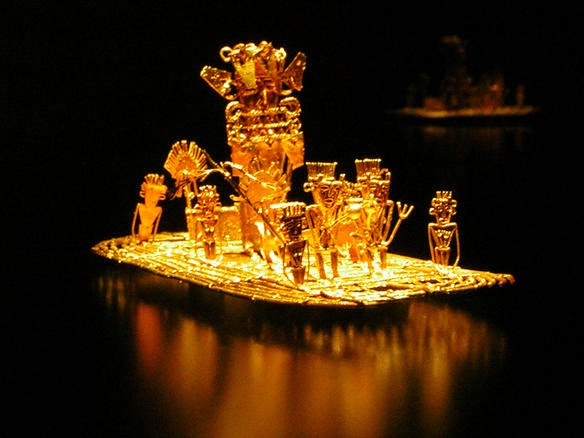
The lust for gold spans all eras, races, and nationalities. To possess any amount of gold seems to ignite an insatiable desire to obtain more.

Through the centuries, this passion gave rise to the enduring tale of a city of gold. In the 16th and 17th centuries, Europeans believed that somewhere in the New World there was a place of immense wealth known as El Dorado. 

The tale of gold riches discovered in the Inca Empire blazed its way across Europe. Before long, desperate adventurers were on their way to South America, hoping to be part of the next expedition which would bring down a native empire rich with gold. A rumor began to spread of a land where the king covered himself in gold. 

Between 1530 and 1650 or so, dozens of expeditions with thousands of men searched for El Dorado in the steamy jungles, blistering deserts, sun-drenched plains and icy mountains of South America, enduring hunger, native attacks, disease and countless other hardships. Many of the men died without seeing so much as a single nugget of gold. El Dorado was but a golden illusion, driven by fevered dreams of Inca treasure.

Megalithic Construction In South America


According to conventional science, neither the Incas nor the Maya or any other pre-Columbian society had the wheel. Everyone marvels at the huge blocks used to build the pyramids of Egypt and the tight tolerances between them. 

The megalithic structure at Sacsayhuaman in Peru has equaled those tolerances with huge multi-sided blocks which are all completely irregular in a kind of three dimensional jigsaw puzzle. According to Graham Hancock, archaeologist, one of those stones is 29 feet high and weighs more than 360 tons; the equivalent of 500 passenger automobiles. That stone is not even at the base of the wall. Yet, the quarry from which the granite blocks were cut was more than 10 miles away. Sacsayhuaman is a walled complex near the old city of Cusco. Some believe the walls were a form of fortification, while others believe it was only used to form the head of the Puma that Sacsayhuaman along with Cuzco form when seen from above. 

Like all Inca stonework there is still mystery surrounding how they were constructed. Thanks to an as yet unexplained precision in stone-cutting, the structure is built in such a way that a single piece of paper will not fit between two stones. This precision, combined with the rounded corners of the limestone blocks, the variety of their interlocking shapes, and the way the walls lean inward (ubiquitous in Inca architecture), is thought to increase the ruins' incredible durability--devastating earthquakes in Cuzco have left it undamaged.

Ants That Become Living Bombs


What do you do if you are a Camponotus saundersi ant that is being threatened? How about you blow yourself up? Hey, why give the bad guy all of the glory by beating you?

Also known as the Malaysian exploding ant, these ants have large glands full of poison inside of their bodies. When threatened, they contract their abs, causing the glands to explode from the head, spraying their predators with poison. The poisoned-covered predators are restrained and can even die from the corrosive venom. These non-reproducing worker ants fulfill their duty to ensure the survival of the ants that pass on their DNA.

Fugu In Japan


They may look innocent while they're swimming, but these Japanese pufferfish will make sure you're good and dead, if you don't prep them carefully before eating. 

A Fugu's organs are rich with the poison tetrodotoxin and must be extracted with the utmost precision to avoid contaminating the surrounding meat. Visit Japan for a taste. Their chefs are thoroughly trained to make sure they don't accidentally kill the adventurous.

The Foo Fighters Of World War II


This rare photograph of "foo fighters" shows UFOs of the World War II era. Reports of these objects were kept secret until 1944.

The term foo fighter was used by Allied aircraft pilots in World War II to describe various UFOs or mysterious aerial phenomena seen in the skies over both the European and Pacific theaters of operations.

Though "foo fighter" initially described a type of UFO reported and named by the U.S. 415th Night Fighter Squadron, the term was also commonly used to mean any UFO sighting from that period. Formally reported from November 1944 onwards, witnesses often assumed that the foo fighters were secret weapons employed by the enemy.

Some possible explanations are that they were electrostatic phenomena similar to St. Elmo's fire, electromagnetic phenomena, or simply reflections of light from ice crystals